
Selected News Is Not a Log
Jefferson County news coverage picks its moments. A reporter covers one incident, not the week's arrests. No official multi-day list exists to measure coverage against, so treat each article as a single reported event. Then go after the booking record or court file from the office that holds it.
Preserve the Request Trail
Save everything. Keep the request, delivery proof, the agency's reply, any estimate or invoice, produced files, and any written denial. If records get withheld, press for the exact exemption and the reason for each redaction. "Not located" means one thing. "Not held here" means another. Restricted and still-in-production answers differ too, and a blank search result should never blur them.
Jefferson Multi-Day Arrest Records
Neither the Jefferson County Sheriff's Office nor Fayette Police posts a 72-hour list. Neither office offers a weekly arrest report or searchable booking archive. The MDOC page for the Jefferson/Franklin County Correctional Facility is a staff directory. It is not a blotter of local arrests. None of this means the jail docket is missing. It just never reaches a public web log.
A multi-day review does different work than a same-day custody check. It asks what happened across a set span. It also asks whether someone was released or transferred, and where the record lives once the posting window closes. Track arrest date, booking date, publication date, and court filing date separately. A Monday story can describe a Friday arrest.
Read a Jefferson Blotter
Start with firm dates. Give the request a clear start and end, and skip vague asks like "all recent arrests," which leave both scope and record series undefined. With no online log to lean on, the county's request form is the best documented route.
- Choose an exact date range and decide whether the target is a jail docket, booking report, incident log, or named person’s record.
- Send the county’s official public-records form asking for existing records in electronic form.
- Ask for booking date and time, arresting agency, charge as recorded, and release or transfer status. Request a photo only if maintained and public.
- Ask for a fee estimate, expected production date, and the legal basis for any redaction or withholding.
- For later case activity, check the Jefferson County Circuit Clerk or a participating court in PAMEC. Keep the court result distinct from the arrest entry.
Need only today's arrests? Try the Arrests Last 24 Hours route first. That page confirms custody fast. This one rebuilds several days and digs for older booking records.
What Blotter Entries Should Show
Jefferson County posts no official web blotter with a set field list. Treat the table here as a request checklist built from the jail-docket record and local access limits.
| Requested field | Why it matters |
|---|---|
| Name and source ID | Links the entry to a booking number or case rather than a name alone. |
| Arrest date and time | Places the enforcement event inside the chosen window. |
| Booking date and time | Shows when intake occurred, which can be later. |
| Arresting agency | Separates Fayette Police, sheriff, or another authority from the holding site. |
| Charge as recorded | Preserves charge language without claiming guilt. |
| Bond or hold | Captures the status shown in that record, not a permanent result. |
| Release or transfer | Explains how the custody period ended or changed. |
| Source timestamp | Shows when the custodian produced or updated the entry. |
Note: A police incident log, jail docket, court docket, and news story can overlap, but none should be mislabeled as another.
Weekend Arrest Reporting Gaps
Jefferson County publishes no weekend or holiday posting schedule. Nothing shows a Monday list capturing every arrest from Friday through Sunday. Staffing, transport, release, transfers, and redaction review can all push dates apart. Assert no specific lag unless the agency confirms one.
For a holiday span, ask the custodian to search the days just before and after your target dates. That widens the hunt only. It does not stretch the facts attributed to the period; it simply catches a booking entered after the arrest date. Also ask what the response covers. The whole regional facility? Jefferson County alone? One arresting agency?
Jefferson Jail Docket Retention
Mississippi's Department of Archives and History keeps a county law-enforcement schedule. It lists jail dockets as permanent. Booking records stay on file for ten years after release, subject to the schedule's terms and lawful court orders. Retention builds no online archive. Redactions may still apply. Even so, it names the exact record family to cite. That citation still matters once a short posting window has closed. The MDAH local-government records page lays out the broader schedule and disposal framework.

That page supplies retention context only. It is no arrest list and carries no current Jefferson County booking results.
News Reports Are Episodic
WAPT, WDAM, SuperTalk Mississippi, and the Natchez Democrat all run event-driven Jefferson County arrest stories. None offers a complete daily or weekly blotter. A story can name an agency, incident date, or facility, yet omit other arrests entirely or carry an update date well past the event. A WAPT report involving Fayette agencies shows the format's hit-and-miss nature.
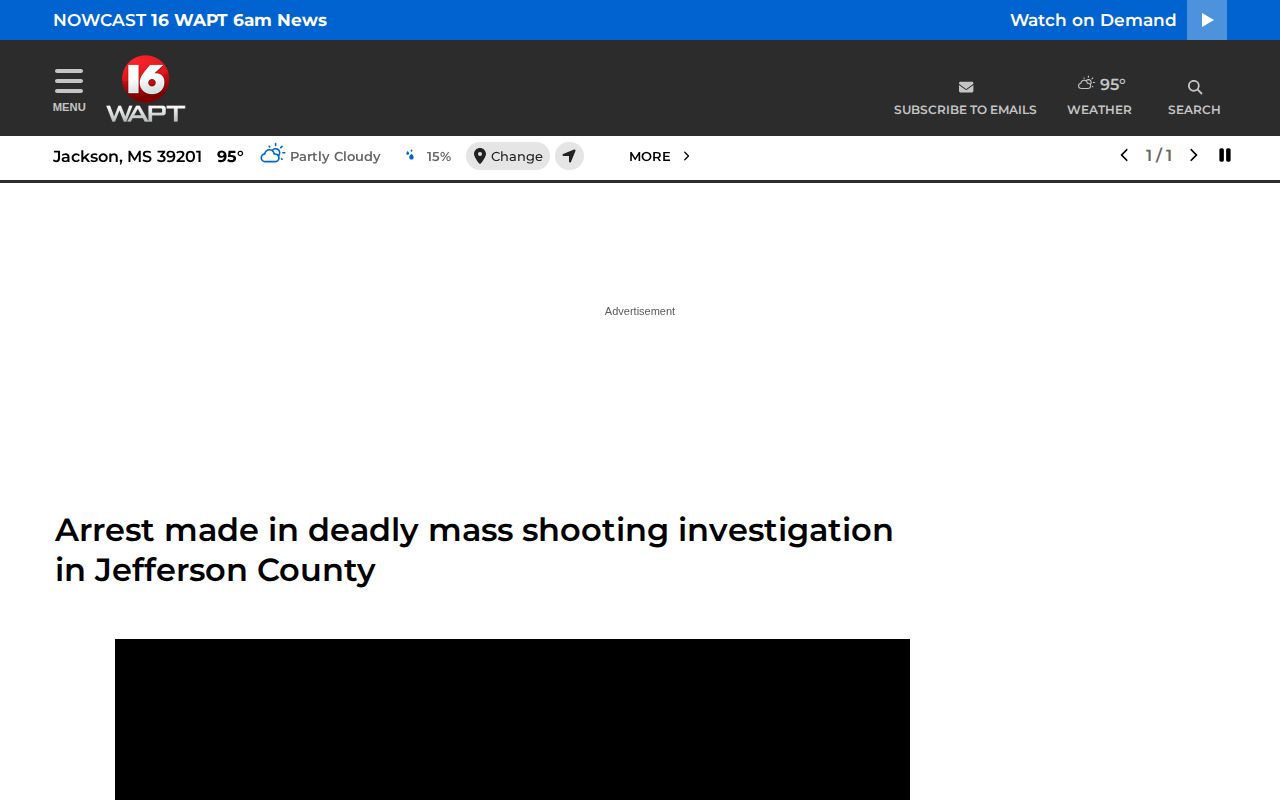
One report documents one incident, never a countywide roster. Keep the "reported" and "charged" wording intact when you cite such a source.
Commercial Archives Stay Secondary
Private archives hold old pages, sure. They are not the Jefferson County Sheriff's jail docket. They can be stale or thin. Lead with official contacts, the county request form, and certified court material. No private page settles whether someone sits in custody now. The secondary historical Jefferson page simply shows what that private archive landscape looks like.
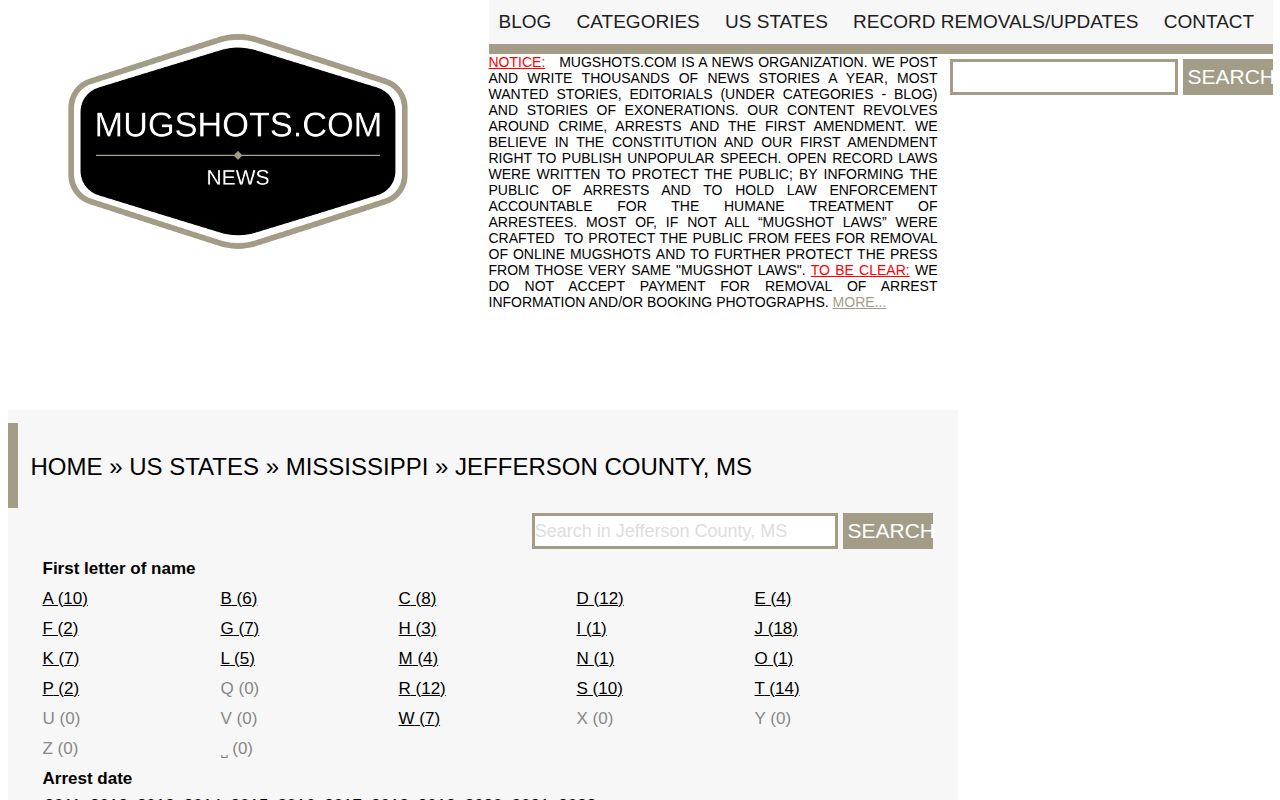
Its images and claims get no rehosting here and no official standing. Check any named event against agency and court sources before you rely on it.
Follow an Arrest to Court
An arrest log shows what Jefferson County officers booked at the start. It can't tell you how a case ends. Justice Court handles the first appearances and certain county matters. Felony charges may move up to the 22nd Circuit Court. The Circuit Clerk keeps the public filings there. Indictments, motions, and judgments that are not sealed or restricted sit in the same files. The trail from an arrest to a verdict runs through two courthouses. The clerk's office is where the paper lives.
PAMEC gives read-only remote access to participating records. Sealed and protected files stay off limits. Spell the name right. Bring the arrest date, agency, and case number if you have them. A blank screen just means the record is not there. Ask the clerk for a docket survey or a certified copy when that fits. Check the current fees before you order.